rmgrowthxmedia.com

#DigitalMarketing

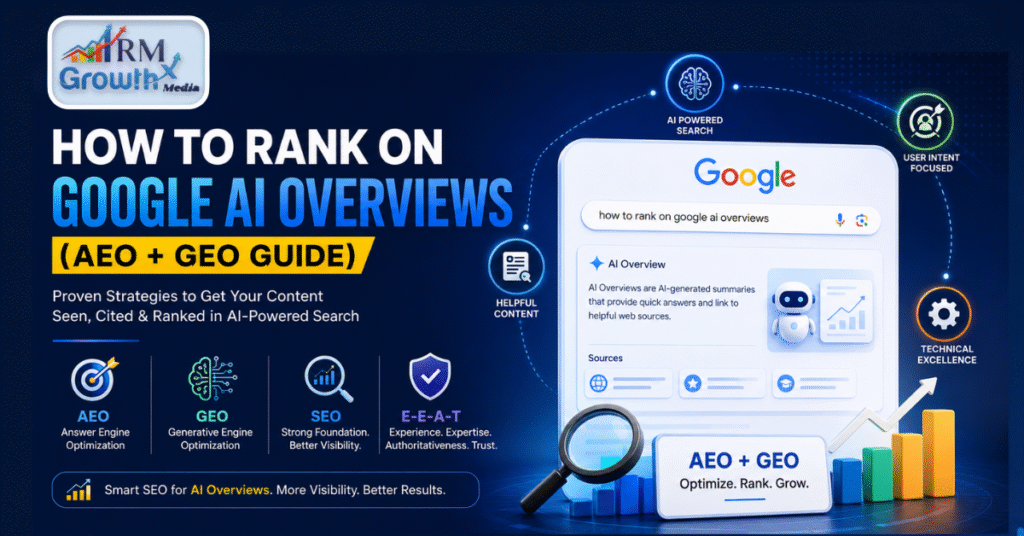
How to rank on Google AI Overviews with AEO and GEO

How to Rank on Google AI Overviews (AEO + GEO Guide)

Learn how to rank on Google AI Overviews using AEO and GEO strategies, helpful content, E-E-A-T, technical SEO, and search intent optimization.

How to Rank on Google AI Overviews (AEO + GEO Guide) Read More »

Digital Marketing Trends, , , , , , , , , , ,
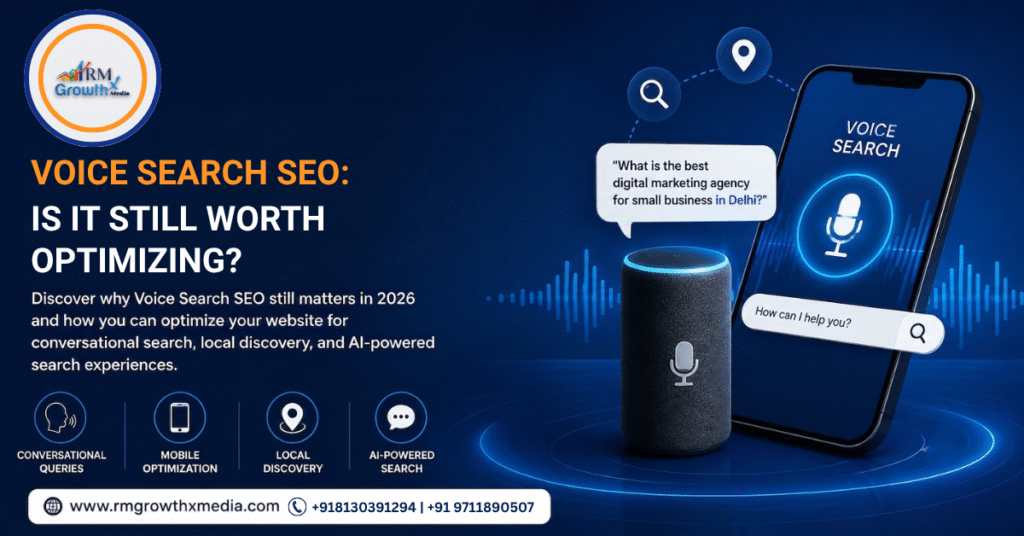
Voice Search SEO Is It Still Worth Optimizing

Voice Search SEO: Is It Still Worth Optimizing?

Learn why Voice Search SEO still matters in 2026 and discover practical strategies to optimize your website for conversational, local, mobile, and AI-powered search.

Voice Search SEO: Is It Still Worth Optimizing? Read More »

Digital Marketing Trends, , , , , , ,
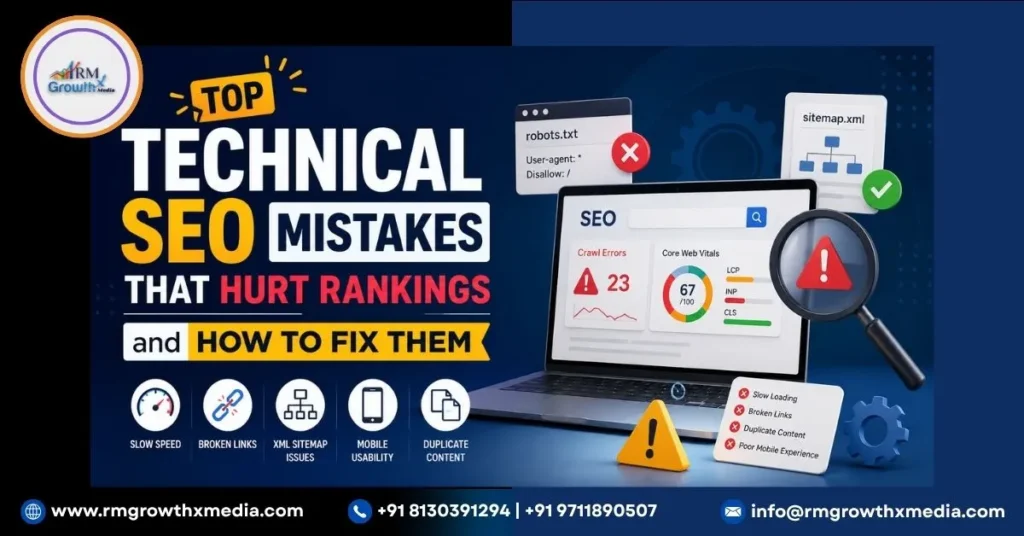
Top Technical SEO Mistakes and How to Fix Them

Top Technical SEO Mistakes That Hurt Rankings and How to Fix Them

Learn the top Technical SEO Mistakes that hurt your website’s search rankings and discover practical solutions to fix them. Improve crawlability, indexing, Core Web Vitals, website speed, and overall SEO performance with this comprehensive guide.

Top Technical SEO Mistakes That Hurt Rankings and How to Fix Them Read More »

Digital Marketing Trends, , , , , , , , ,
social media marketing

Social Media Marketing for Beginners: Step-by-Step Success Guide

Introduction Welcome to your ultimate social media marketing step by step guide — especially curated for beginners who want to build a strong online presence, grow engagement, and drive business success. Whether you’re starting with zero followers or looking to sharpen your skills, this guide breaks down social media marketing basics into actionable steps anyone can follow.Social media marketing is the practice of using platforms like Facebook, Instagram, LinkedIn, and others to engage audiences, build brand awareness, and grow your business online. With the right approach, even newcomers can leverage social platforms effectively to connect with customers and achieve measurable results. 1. What Is Social Media Marketing? At its core, social media marketing basics involve using social platforms to promote content, connect with audiences, and achieve business goals such as increased visibility, engagement, leads, or sales. It’s not just about posting regularly — it’s about strategic planning, meaningful engagement, tracking results, and optimization.In today’s digital world, social media is one of the most cost-effective and influential marketing channels available. With billions of users active daily, it offers businesses a massive opportunity to grow. 2. Step 1: Define Your Goals The first step in your social media marketing step by step journey is to set clear goals. Ask yourself. What do you want to achieve with your social media efforts? Common objectives include: Increasing brand awareness Growing audience engagement Driving traffic to your website Generating leads Increasing sales Providing customer support You can use the SMART framework (Specific, Measurable, Achievable, Relevant, Time-bound) to keep your goals focused and trackable. 3. Step 2: Know Your Audience Understanding your audience is essential for successful social media marketing. Begin by identifying: Demographics (age, gender, location) Interests and hobbies Pain points and needs Social platform behavior (where they spend time online) Once you know your audience, you can tailor your content to serve them value — rather than just broadcasting generic posts. 4. Step 3: Choose the Right Platforms Not all platforms will be perfect for your business. As a beginner, it’s wise to start with a few where your audience is most active. For example: Instagram: Great for visual storytelling and lifestyle brands Facebook: Ideal for community building and advertisements LinkedIn: Best for B2B and professional networking Choose platforms strategically instead of trying to be everywhere. Focus builds quality 5. Step 4: Build Your Profile & Brand Voice Your profile is your digital storefront. Ensure it communicates your brand clearly: A clear and high-quality profile image (logo if business) A keyword-rich bio with a value proposition Website link or CTA Consistent brand tone and aesthetics A consistent tone and style help build brand trust and recognition. 6. Step 5: Create Your Social Media Marketing Strategy A strong social media marketing strategy for beginners provides the roadmap for all your activities. Key elements include: Content planning: Decide what content you’ll share and why Posting schedule: Consistency is vital — use a content calendar to plan posts Engagement plan: Respond to comments and messages quickly Analytics tracking: Use built-in tools to measure results and optimize An organized strategy prevents guesswork and ensures every post serves a purpose. 7. Step 6: Content Planning & Creation Content is the heart of social media. For beginners, focus on content that: 1. Educates 2. Engages 3. Inspires 4. Entertains Common content types include: Text posts with tips or insights Images and graphics Short videos & reels Polls and interactive content Behind-the-scenes stories A balanced mix keeps your feed fresh and engaging. Use a content calendar to plan posts weeks ahead for consistency. 8. Step 7: Engagement & Growth Engagement is more than likes — it’s about building relationships. Some effective social media marketing tips for beginners include: 💬 Respond promptly to comments and messages 💡 Ask questions to encourage conversations 📣 Feature user-generated content (UGC) 🤝 Collaborate with influencers or community members Active engagement helps nurture loyalty and improves your visibility within platform algorithms. 9. Step 8: Analytics & Improvement To ensure your strategy is working, tracking basic analytics is crucial: 1.Reach and impressions 2. Engagement (likes, comments, shares) 3.Website traffic from social platforms 4. Conversion metrics These data points reveal what content resonates best and where you should double down or adjust your strategy. Always refine based on performance insights. 10. Step 9: Tips for Small Businesses If you’re running social media marketing for small businesses, consider the following: 🔹 Focus on platforms where your customers spend time 🔹 Blend free organic posts with low-cost ads for visibility 🔹 Encourage reviews and testimonials 🔹 Use scheduling tools like Buffer or Hootsuite 🔹 Optimize visuals and captions for mobile audiences Small tweaks can create big impacts as your business presence grows online. Frequently Asked Questions 1. What is social media marketing step by step? Social media marketing step by step means planning your goals, choosing the right platforms, creating content, posting consistently, engaging with your audience, and tracking results to improve performance. 2. What are the basic concepts of social media marketing? The social media marketing basics include profile optimization, content creation, regular posting, audience engagement, and performance analysis. 3. Is social media marketing good for beginners? Yes, social media marketing is ideal for beginners because it is easy to start, budget-friendly, and helps build brand awareness and customer engagement quickly. 4. How can beginners start social media marketing? Beginners can start by understanding their audience, selecting one or two platforms, creating valuable content, and following a simple social media marketing strategy for beginners. 5. Is social media marketing useful for small businesses? Yes, social media marketing for small businesses helps increase visibility, connect with customers, and generate leads without a high marketing budget. Conclusion Social media marketing may feel overwhelming in the beginning, but with the right strategy and consistent effort, anyone can build a strong online presence and grow their brand. By setting clear goals, understanding your audience, choosing the right platforms, creating valuable content, and tracking performance, you can achieve long-term success step by step. At

Social Media Marketing for Beginners: Step-by-Step Success Guide Read More »

Digital Marketing Tips, , , , , , ,
What is performance marketing definition and key channels diagram

What Is Performance Marketing

Performance marketing is a results-driven digital marketing approach where businesses pay only for measurable actions like clicks, leads, or sales. It focuses on data, transparency, and ROI, making it ideal for brands seeking fast, scalable, and trackable growth.

What Is Performance Marketing Read More »

Digital Marketing Tips, , , ,
Digital marketing trends 2026

2026 Digital Marketing Trends: What Every Marketer Needs to Know

Navigating the fast-evolving digital marketing landscape requires businesses to constantly adapt their acquisition strategies to stay ahead of customer expectations and platform updates. Understanding the top digital marketing trends 2026 is essential for brands, marketers, and business owners who want to maintain high online visibility, capture intent-driven leads, and scale their revenue predictably. Many businesses ask a fundamental question: “Why are traditional marketing methods yields lower returns despite increasing ad budgets and consistent content publishing?” The answer lies in how search engine architectures, social discovery algorithms, and consumer trust dynamics have fundamentally shifted. In 2026, digital marketing is no longer about pushing generic promotional messages across isolated channels. It is about building intelligent, Answer Engine Optimized (AEO) ecosystems, leveraging direct-response short-form video discovery, capturing privacy-compliant first-party data, and deploying high-converting omnichannel lead funnels. In this comprehensive guide, we unpack the definitive digital marketing trends 2026 and provide an execution blueprint to help your business turn industry shifts into measurable growth. Why Legacy Marketing Strategies Are Failing in 2026 Before adopting new tools and tactics, it is critical to diagnose why past marketing practices are experiencing diminishing returns across modern channels: Over-Reliance on Keyword Density: Search engines no longer rank pages based on simple keyword repetition; algorithms prioritize contextual intent, direct answers, and verified domain authority. Third-Party Data Deprecation: Tracking users across external sites with third-party cookies is effectively obsolete, making broad interest targeting in paid ads less cost-effective. Platform-Level Zero-Click Behavior: Search engines and social media platforms are designed to keep users within their native ecosystems, reducing simple organic link click-through rates. Low-Value Content Saturation: Generic, surface-level AI-generated blog posts are routinely ignored by search crawlers and prospective customers alike. Friction-Heavy Conversion Funnels: Requiring site visitors to complete tedious multi-field contact forms before delivering value leads to high landing page bounce rates. Deep-Dive 2026 Digital Marketing Trends & Strategic Pillars 1. Answer Engine Optimization (AEO) & AI Overviews Search engine optimization has expanded far beyond traditional ten-blue-link SERP layouts. With Google AI Overviews and conversational answer engines dominating search results, users frequently receive instantaneous answers directly at the top of their screen. To remain visible in this zero-click search environment, content strategies must transition toward Answer Engine Optimization (AEO) and Generative Engine Optimization (GEO): Optimizing for Conversational Intent: Align content around complex long-tail questions (e.g., “how to optimize customer acquisition cost in 2026”) rather than short, generic head terms. Structuring Information for AI Parsing: Use clean bulleted lists, comparative data tables, and schema markup so search bots can process and cite your brand as a primary source. Demonstrating E-E-A-T (Experience, Expertise, Authoritativeness, Trustworthiness): Search engines prioritize original research, unique case studies, and real-world execution proof over generic summaries. Review official guidelines on Google Search Central E-E-A-T Guidance to ensure your editorial strategy aligns with search quality benchmarks. 2. Social Search Algorithms & Video-First Discovery Social media channels are no longer just passive feeds—they have evolved into primary search engines for younger demographics and B2B buyers evaluating solutions. Indexing Video Transcripts & Spoken Audio: Algorithms now parse spoken dialogue within videos, caption text, and visual overlays to serve micro-content in direct response to user search queries.   Direct-Response Short-Form Video: High-performing brands focus on 30-to-60-second educational breakdowns, behind-the-scenes transformations, and client success breakdowns across Instagram Reels, YouTube Shorts, and LinkedIn.   Social Search Optimization (SSO): Incorporate targeted search terms directly into video captions, naturally spoken scripts, and on-screen graphics to maximize discovery on social networks. To scale your organic reach and paid social performance, explore our specialized Social Media Advertising Services. 3. First-Party Data Capture & Automated Lead Magnets With third-party tracking restrictions making broad ad targeting less precise, building proprietary databases of first-party customer data has become a mandatory performance pillar. Interactive Lead Magnets: Replace generic PDF downloads with high-utility assets like automated pricing estimators, audit checklists, diagnostic quizzes, and specialized templates. Consent-Based Data Collection: Clearly communicate value propositions when requesting user contact information, ensuring complete compliance with global data privacy regulations. Automated Lead Nurturing Workflows: Instantly route captured opt-ins into multi-touch email sequences that deliver immediate value, address objection points, and guide prospects toward booking consultation calls. 4. Omnichannel Retargeting & High-Intent Paid Search Relying on a single acquisition channel introduces significant revenue risk. Top-performing businesses in 2026 leverage unified omnichannel funnels where organic authority and paid media reinforce one another. Intent-Based Paid Search: Target high-intent commercial search queries to present dedicated landing pages directly to decision-makers seeking immediate solutions. Cross-Platform Social Retargeting: Re-engage website visitors across Meta ad networks and Google Video/Display feeds with low-friction retargeting offers (e.g., free strategy sessions or video case studies). Refer to Meta Business Help Center for technical guidance on configuring server-side Conversion APIs (CAPI) to track custom event signals accurately. Data-Driven Conversion Bidding: Optimize paid ad bidding for verified opt-ins and pipeline revenue rather than top-of-funnel clicks or impressions. To eliminate wasted ad spend and scale your ROAS, partner with our team through our Paid Advertising Services. 5. Conversion Rate Optimization (CRO) & Web Architecture Driving web traffic without a conversion-focused site layout is an expensive mistake. In 2026, website design must function as a fast, responsive, direct-response sales environment. Page Speed & Core Web Vitals: Ensure site loading times remain well under 2 seconds across mobile devices to prevent visitor drop-off. Frictionless UX & Clean Hierarchy: Place strong, single-focused Calls to Action (CTAs) above the fold and simplify form fields to maximize submission rates. Social Proof & Trust Architecture: Position client reviews, verifiable metrics, video testimonials, and industry certifications strategically along user navigation paths. Strategic Internal Funnel Routing: Seamlessly guide readers from top-of-funnel informational blog posts into high-converting service landing pages. If your site structure is failing to convert traffic, explore our custom Web Design & Development Services. 2026 Digital Marketing Execution Matrix Strategic Area 2026 Core Priority Key Performance Metric Search Engine Optimization AI Overview citations & Answer Engine Optimization (AEO) Brand Search Citations & Organic Leads Paid Media Advertising Direct-response video creatives & Conversion bidding Cost Per Lead

2026 Digital Marketing Trends: What Every Marketer Needs to Know Read More »

Digital Marketing Trends, , , , ,
Digital Marketing Update 2025

Digital Marketing Update 2025: What’s New, What’s Next

The Digital Marketing Update 2025 highlights a landscape that is more dynamic, data-driven, and AI-powered than ever before. What once relied on simple banner ads, keyword stuffing, or basic email campaigns has now transformed into a highly intelligent digital ecosystem. Today’s marketing success is driven by AI in digital marketing, predictive analytics in marketing, evolving marketing automation trends, immersive customer experiences, and advanced SEO strategies designed for both search engines and AI platforms. In 2025, brands are no longer competing solely for online visibility. Instead, they are competing on personalization, speed, accuracy, relevance, and trust. Customers expect brands to understand their needs, anticipate their behavior, and deliver consistent experiences across every digital touchpoint. This shift has made Generative Engine Optimization (GEO) and data-led decision-making essential components of modern digital growth strategies. At RM GrowthX Media, we believe that staying ahead in the Digital Marketing Update 2025 requires more than following trends—it means embracing innovation early, adapting faster than competitors, experimenting smarter with emerging technologies, and building scalable marketing frameworks rooted in data intelligence and creative storytelling. By combining automation, AI-powered insights, and human-centric strategies, brands can unlock sustainable growth in an increasingly competitive digital environment. Let’s explore the most important Digital Marketing Trends 2025, what’s changing right now, and what lies ahead for businesses aiming to grow, scale, and lead in the future of digital marketing. 1. The Data Powerhouse: Smarter Insights, Better Marketing Decisions As highlighted in the Digital Marketing Update 2025, data remains the backbone of modern digital marketing—but the way brands collect, analyze, and activate data has evolved dramatically. In today’s AI-driven ecosystem, raw data alone is no longer enough. Marketers now rely on predictive analytics in marketing to anticipate user behavior, forecast demand, and design customer journeys that feel timely, relevant, and personalized. With the integration of AI in digital marketing, businesses can process massive datasets in real time, uncover hidden patterns, and transform insights into action. AI-powered analytics tools enable brands to predict purchase intent, reduce churn, optimize ad spend, and personalize messaging across channels. This shift from reactive reporting to proactive decision-making is redefining how campaigns are planned and executed. These insights directly fuel the latest marketing automation trends, where automated workflows respond instantly to user actions. From behavior-triggered emails and dynamic website content to personalized ad delivery, automation ensures consistency and efficiency while enhancing the overall customer experience. At the same time, data intelligence is reshaping Generative Engine Optimization (GEO), helping brands structure content that AI-powered search engines and conversational platforms can easily understand, summarize, and recommend. To stay competitive in the Digital Marketing Update 2025, brands must also adopt advanced SEO strategies that align predictive data with search intent and AI discovery. This includes optimizing content for both traditional search engines and emerging AI-driven search experiences. When data, AI, automation, SEO, and GEO work together, brands gain smarter insights, faster execution, and a decisive advantage in an increasingly competitive digital landscape. What’s New in Data-Driven Marketing First-party data has become the most valuable asset due to stricter privacy regulations and the global phase-out of third-party cookies. Advanced predictive analytics helps forecast customer behavior, purchase intent, lifetime value, and churn risks. Granular audience segmentation enables hyper-relevant messaging across channels. Real-time analytics tools allow marketers to optimize campaigns instantly instead of waiting for post-campaign reports. What’s Next Hyper-personalization powered by AI, delivering tailored content, offers, and experiences in real time. Unified customer data platforms (CDPs) that connect website, social media, CRM, and ad data into one intelligent ecosystem. For agencies like RM GrowthX Media, this evolution means building data-backed digital strategies where every campaign decision is supported by clean, accurate, and actionable insights — not assumptions. 2. AI Takes Center Stage: The New Engine of Digital Marketing In 2025, AI in digital marketing is no longer a supporting tool — it is the engine driving performance, creativity, and scalability. From content creation to ad optimization, AI is transforming how brands connect with audiences. What’s New with AI-Powered Marketing AI-generated content that adapts to brand voice, user intent, and search behavior. Smart ad platforms that automatically launch, test, pause, and reallocate budgets for maximum ROI. AI chatbots delivering hyper-personalized customer support and product recommendations 24/7. Machine learning models that identify trends before they become mainstream. Tools Leading the Transformation ChatGPT & Jasper for content ideation and creation Meta Advantage+ for AI-driven ad optimization Google Performance Max for automated, multi-channel advertising What’s Next Generative Engine Optimization (GEO) influencing how brands appear in AI-powered search results and chat-based search engines. Predictive creatives that dynamically change visuals and messaging based on user behavior. Full-funnel marketing automation powered by AI workflows. With AI at the core, RMGrowthXMedia helps brands scale faster, reduce manual effort, and improve marketing precision without losing creativity. 3. Marketing Automation Trends 2025: Efficiency Meets Personalization Marketing automation in 2025 has evolved far beyond basic email sequences. Today, automation connects every stage of the customer journey — from first interaction to long-term loyalty. What’s New in Marketing Automation Automated campaigns triggered by real-time user behavior AI-driven email personalization at scale Smart CRM integrations aligning marketing, sales, and customer support Advanced workflow triggers across multiple platforms Popular Automation Tools HubSpot ActiveCampaign Mailchimp Zoho CRM What’s Next Emotion-based automation, where content adapts based on sentiment analysis End-to-end automation from lead capture to retention and advocacy At RM GrowthX Media, automation ensures no lead is missed, no customer feels ignored, and every campaign runs with consistency and precision. 4. The Human Touch: Authenticity Becomes a Competitive Advantage Despite rapid technological advancements, one of the most powerful Digital Marketing Trends 2025 is the return to authenticity. Audiences crave real stories, real people, and real values. What’s New Brands sharing behind-the-scenes content and honest brand journeys Growth of micro and nano influencers with higher trust levels Community-driven social media marketing strategies Transparent content that builds credibility What’s Next Hybrid campaigns combining AI efficiency with human emotion Social-first brand building Ethical marketing and sustainability becoming core brand values At RM GrowthX
Digital Marketing Update 2025: What’s New, What’s Next Read More »

Digital Marketing Updates, , , ,
Online marketing strategy

How to Build a Winning Online Strategy: Expert Marketing Tips

In today’s fast-paced digital world, having a powerful online strategy isn’t optional — it’s essential. Whether you’re a startup or an established brand, the key to success lies in balancing creativity with data-driven insights. In this blog, we’ll share expert marketing tips to help you attract the right audience, boost engagement, and convert clicks into loyal customers. From SEO and paid ads to content marketing and analytics, discover how to build a winning online presence that drives real results

How to Build a Winning Online Strategy: Expert Marketing Tips Read More »

Digital Marketing Tips, , , ,