Introduction
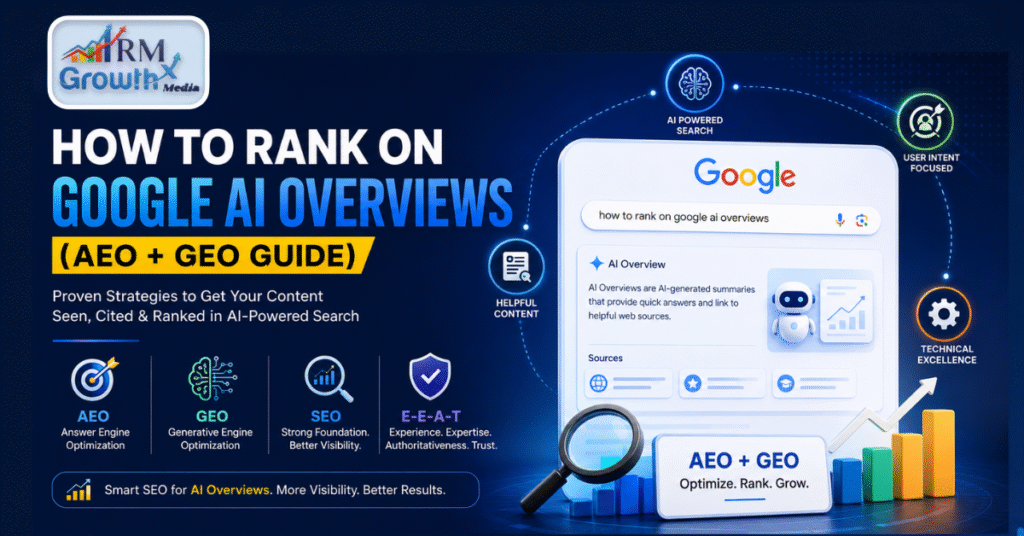
Google Search is changing rapidly. Users are no longer relying only on traditional blue links to find answers. With AI-powered experiences such as Google AI Overviews and AI Mode, search results can now provide synthesized answers and links to supporting web sources.
For businesses and content creators, this creates a new opportunity: earning visibility inside AI-generated search experiences.
But ranking in Google AI Overviews isn’t about finding a secret “AI ranking hack.” In fact, Google’s latest guidance makes it clear that the fundamentals of SEO still matter for generative AI search. Google’s AI features are built on its core Search ranking and quality systems, which means your website still needs strong technical accessibility, useful content, relevance, and credibility. Businesses can also refer to Google Search Central — AI Features and Your Website to understand how websites can improve their visibility in AI-powered search experiences.
This is where Technical SEO Mistakes become important. If Google cannot properly crawl, render, understand, or index your content, it becomes harder for your pages to compete for visibility in both traditional Search and AI-powered experiences.
In this guide, we’ll explain how AI Overviews work, what AEO and GEO actually mean, which SEO practices matter most, common Technical SEO Mistakes to avoid, and how to build content that has a stronger chance of being discovered and cited in AI-powered search.
What Are Google AI Overviews?
Google AI Overviews are AI-generated summaries that can appear at the top of certain Google Search results.
Instead of requiring users to visit multiple websites to understand a topic, an AI Overview can summarize relevant information and provide links to web pages that support or expand on the answer.
Google’s documentation explains that AI Overviews and AI Mode use Google’s Search systems and can surface information from its index.
For more details about how these AI-powered search experiences work, explore Google Search Central — AI Features in Search
This changes the way businesses should think about search visibility.
Previously, the main goal was often:
Rank → Get the click → Convert the visitor
Now, there is another layer:
Rank → Become a useful source → Earn visibility in AI-generated answers → Attract qualified visitors
That doesn’t mean traditional rankings no longer matter. Instead, businesses need to build content that can perform across multiple search experiences.
What Is AEO and GEO?
Answer Engine Optimization (AEO)
AEO, or Answer Engine Optimization, focuses on making content easier for answer-based search systems to understand and use.
The goal is to provide clear, direct answers to questions users are asking.
For example, instead of writing a long introduction before answering:
“What is technical SEO?”
An AEO-friendly page could immediately provide:
Technical SEO is the process of improving a website’s technical structure so search engines can crawl, understand, and index its pages effectively.
The explanation can then continue with examples and deeper information.
Generative Engine Optimization (GEO)
GEO, or Generative Engine Optimization, generally refers to optimizing content for generative AI search experiences.
The terminology is increasingly used across the SEO industry, but Google makes an important distinction: businesses don’t need to abandon traditional SEO and adopt a completely separate set of “GEO hacks.” Google’s guidance says that optimizing for generative AI search is still fundamentally search optimization.
So, rather than treating AEO, GEO, and SEO as completely separate strategies, think of them as overlapping approaches.
SEO provides the foundation.
AEO improves answer clarity.
GEO focuses on visibility within generative search experiences.
Can You Actually Rank in Google AI Overviews?
There is no guaranteed method for getting your website included in an AI Overview.
Google’s AI systems decide which information and sources are useful for a particular query.
Therefore, the better strategy is to make your content:
- Relevant to the query
- Helpful to users
- Accurate
- Original
- Well-structured
- Technically accessible
- Easy for search engines to understand
- Supported by credible information
Google specifically recommends continuing to follow established SEO best practices when optimizing for its generative AI features.
This means businesses shouldn’t completely redesign their SEO strategy around AI Overviews.
Instead, they should strengthen the fundamentals while making their content clearer and more useful.
1. Create Content That Directly Answers User Questions
One of the strongest approaches for AEO is answering questions clearly.
Users frequently search using question-based queries such as:
- What is SEO?
- How does technical SEO work?
- How can I improve my Google rankings?
- What is AEO?
- How do Google AI Overviews work?
- How can I optimize my website for AI search?
Your content should provide a direct answer before expanding into detailed explanations.
Use the “Answer First, Explain Second” Structure
A useful structure is:
Question → Direct answer → Explanation → Examples → Additional details
For example:
What Is AEO?
AEO is the practice of structuring and optimizing content so that answer-focused search experiences can easily understand and surface useful information.
After the direct answer, explain how AEO works, provide examples, and discuss best practices.
This structure improves readability while also making important information easier to identify.
2. Match Search Intent
Search intent is one of the most important parts of modern SEO.
A user searching:
“What is GEO?”
has a different intent from someone searching:
“GEO services for businesses.”
The first query is informational.
The second may have commercial intent.
Your content needs to satisfy the intent behind the query.
The Four Main Types of Search Intent
Informational
The user wants to learn something.
Example:
“What is Google AI Overview?”
Navigational
The user wants to find a particular website or brand.
Example:
“Google Search Central”
Commercial Investigation
The user is comparing options.
Example:
“best SEO agency for AI search optimization”
Transactional
The user is ready to take action.
Example:
“hire SEO agency”
Understanding intent helps you create content that provides the right type of information at the right stage of the user’s journey.
3. Build Topical Authority
A single article rarely establishes strong authority around an entire subject.
Instead, create a network of related content.
For example, if your website focuses on SEO, you could build a topic cluster around AI search:
Pillar Content
How to Rank on Google AI Overviews
Supporting Content
- What Are Google AI Overviews?
- AEO vs GEO
- How AI Search Is Changing SEO
- Technical SEO for AI Search
- How to Optimize Content for Search Intent
- Google AI Mode SEO
- E-E-A-T and AI Search
- Internal Linking for SEO
- Common Technical SEO Mistakes
These pages can naturally link to one another.
This creates a stronger topical structure and gives users multiple useful resources.
4. Avoid Technical SEO Mistakes
Technical SEO remains the foundation of AI search visibility.
Google’s current guidance explains that pages need to be technically accessible and indexed to be eligible for visibility in its generative AI search features.
Some common Technical SEO Mistakes include:
- Blocking important pages from crawling
- Incorrect robots.txt rules
- Noindexing valuable pages
- Poor internal linking
- Broken links
- Incorrect canonical tags
- Duplicate content
- Slow-loading pages
- Poor mobile usability
- JavaScript rendering problems
- Incorrect XML sitemaps
- Orphan pages
- Poor site architecture
- Incorrect structured data
Why Technical SEO Matters for AI Search
Before AI systems can understand your content, search engines need to be able to access it.
If an important page isn’t properly crawled or indexed, having excellent content won’t solve the underlying problem.
Technical SEO Checklist
Check that:
- Important pages are crawlable
- Important pages are indexable
- XML sitemaps are accurate
- Internal links work correctly
- Canonical tags are appropriate
- Pages load efficiently
- Mobile experience is strong
- HTTPS is enabled
- Website architecture is logical
Technical SEO should therefore be treated as an ongoing process rather than a one-time audit.
5. Create Original, Non-Commodity Content
Google’s current generative AI guidance places emphasis on unique, useful, non-commodity content.
This is particularly important as AI makes it easier to produce generic articles.
If thousands of websites publish essentially the same explanation, simply rewriting existing information may not provide much additional value.
How to Make Content More Original
Add:
- First-hand experience
- Original examples
- Case studies
- Expert commentary
- Data
- Screenshots
- Practical processes
- Unique comparisons
- Lessons learned
- Industry-specific insights
For example, instead of writing:
“Internal linking is important for SEO.”
Explain how you actually identify orphan pages during an SEO audit and how you decide which pages should link to them.
That’s much more useful.
6. Demonstrate E-E-A-T
E-E-A-T stands for:
- Experience
- Expertise
- Authoritativeness
- Trustworthiness
While E-E-A-T isn’t a single switch that guarantees rankings, demonstrating these qualities can make content more credible and useful.
Ways to Strengthen E-E-A-T
Include:
- Author information
- Relevant experience
- Original research
- Case studies
- Expert opinions
- Reliable references
- Transparent business information
- Clear contact information
- Updated content
- Real examples
For business websites, make it easy for users to understand who is behind the content and why they should trust the information.
7. Structure Content for Easy Understanding
AI systems need to interpret your content, while human readers need to navigate it quickly.
Good structure helps both.
Use:
- Clear H2 headings
- Descriptive H3 headings
- Short paragraphs
- Bullet points
- Numbered lists
- Tables where useful
- Definitions
- Examples
- FAQs
For question-based content, use the question itself as a heading.
For example:
How Do Google AI Overviews Work?
Then answer the question directly.
This makes the page easier to scan and understand.
8. Use Clear Definitions and Concise Answers
AEO-friendly content often benefits from concise definitions.
For example:
What Is GEO?
GEO is an approach to improving a website’s visibility within generative AI search experiences by creating useful, relevant, authoritative content that AI systems can understand and potentially surface.
Then expand on the concept.
Don’t make readers search through five paragraphs to find a basic definition.
9. Optimize for Conversational and Long-Tail Queries
AI search encourages more conversational interactions.
Instead of searching:
“SEO agency Gurgaon”
a user might ask:
“Which SEO strategies can help a small business in Gurgaon get more organic leads?”
These queries reveal much more about the user’s intent.
How to Optimize for Conversational Search
Include natural questions such as:
- How does Google AI Overview work?
- How can my website appear in AI Overviews?
- What content does Google AI use?
- Does traditional SEO still matter for AI search?
- What Technical SEO Mistakes can prevent visibility?
- How do I optimize content for AEO?
- What is the difference between AEO and GEO?
Then provide concise, useful answers.
10. Strengthen Internal Linking
Internal links help users discover related content and help search engines understand relationships between pages.
For RM GrowthX Media, relevant internal links can connect this article with:
Search Engine Optimization Services
This is useful when discussing SEO foundations and technical optimization.
You can also link to:
Digital Marketing Services
when explaining how SEO fits into a broader digital marketing strategy.
And when discussing website performance, technical architecture, and user experience, link naturally to:
Web Design & Development Services
Internal links should always be relevant to the surrounding content.
Avoid adding links simply for the sake of increasing the number of links on a page.
11. Use Structured Data Correctly
Structured data can help search engines understand specific types of content.
Depending on your page, relevant structured data may include:
- Article
- Organization
- Local Business
- Breadcrumb
- Product
- Event
However, structured data isn’t a magic formula for appearing in AI Overviews.
Don’t add markup simply because you want Google to show your page in a particular search feature.
The information should accurately represent the content on the page.
12. Optimize Images and Multimedia
AI-powered search isn’t limited to text.
Google’s current guidance also discusses the value of local, shopping, image, and video content where relevant.
For your website, optimize images using:
- Descriptive filenames
- Accurate ALT text
- Relevant surrounding content
- Appropriate image sizes
- Compression
- High-quality visuals
For videos, provide useful titles, descriptions, and supporting text.
Multimedia should add value rather than simply exist for decoration.
13. Don't Rely on AEO or GEO “Hacks”
This is one of the most important lessons from Google’s latest guidance.
There are many claims online about special techniques that supposedly guarantee AI Overview visibility.
Google specifically advises focusing on effective SEO strategies instead of tactics such as unnecessary content “chunking,” creating AI-specific text files such as llms.txt, or pursuing inauthentic mentions.
That means you shouldn’t build your strategy around:
- Keyword stuffing
- Artificial mentions
- Forced entity references
- Large volumes of generic AI content
- Unnecessary AI-specific files
- Manipulative link schemes
- Fake expertise
Instead, invest in the fundamentals.
14. Monitor AI Search Visibility
Traditional SEO reporting typically focuses on:
- Clicks
- Impressions
- CTR
- Rankings
- Organic traffic
These metrics remain important.
But AI-powered search creates additional visibility considerations.
Google has introduced generative AI performance reporting in Search Console, giving site owners ways to analyze performance from generative AI features.
What Should You Monitor?
Track:
- Organic clicks
- Impressions
- CTR
- Search queries
- Landing pages
- Conversions
- AI search visibility where available
- Branded searches
- Non-branded searches
Don’t focus only on whether your brand appears in an AI answer.
Ask whether that visibility is bringing qualified visitors and business results.
15. Keep Your Content Updated
AI search systems need reliable and relevant information.
If your article contains:
- Outdated statistics
- Old product information
- Expired recommendations
- Incorrect screenshots
- Old SEO practices
- Broken links
its usefulness can decline.
Review important pages periodically.
However, don’t update an article simply to change its publication date.
Make meaningful improvements when information, user intent, or the quality of the page has changed.
16. Build Brand and Entity Recognition
Search engines increasingly need to understand not only individual keywords but also entities, brands, organizations, people, products, and relationships.
Make your business information consistent across your website and relevant online profiles.
Clearly communicate:
- Business name
- Services
- Expertise
- Location
- Contact information
- About information
- Team information
- Industry focus
For RM GrowthX Media, this means creating a clear connection between the company’s brand, digital marketing expertise, SEO services, and supporting content.
17. Create Content That Deserves to Be Cited
If you want your content to be used as a source in AI-generated answers, don’t just create content that repeats common information.
Create content worth referencing.
For example:
Instead of:
“SEO is important for businesses.”
Create:
“A practical SEO audit checklist for small businesses: 25 technical, content, and conversion issues to check before investing in more content.”
The second resource provides a more specific and useful reference.
Create Citation-Worthy Content With:
- Original data
- Expert commentary
- Unique examples
- Step-by-step processes
- Detailed guides
- Comparisons
- Case studies
- Research
- Clearly sourced claims
The goal is not to “force” Google to cite your content.
The goal is to make your content genuinely valuable enough to be considered useful.
18. A Practical AEO + GEO Strategy for 2026
If you want to optimize your website for AI-powered search, follow this process.
Step 1: Identify Question-Based Searches
Research what your audience is asking.
Look for:
- Who
- What
- Why
- How
- When
- Where
- Best
- Comparison
- Cost
- Alternatives
Step 2: Map Search Intent
Determine whether each query is informational, navigational, commercial, or transactional.
Step 3: Create Helpful Content
Answer the question clearly and then provide deeper information.
Step 4: Strengthen Technical SEO
Fix crawling, indexing, architecture, performance, mobile, and internal linking problems.
Step 5: Demonstrate Expertise
Add real experience, examples, evidence, and trustworthy information.
Step 6: Build Topic Clusters
Create supporting articles around your main subject.
Step 7: Improve Internal Linking
Connect related pages using relevant anchor text.
Step 8: Optimize Multimedia
Use helpful images, videos, and other formats where appropriate.
Step 9: Keep Content Updated
Review important pages and improve them when necessary.
Step 10: Measure Performance
Use Google Search Console and analytics to understand organic and AI-search performance.
Common Mistakes to Avoid When Optimizing for AI Overviews
1. Treating AI Overviews Like a Separate Search Engine
AI Overviews are part of Google Search. Don’t abandon traditional SEO fundamentals.
2. Creating Generic AI Content
AI-generated content that provides little original value is unlikely to differentiate your website.
3. Keyword Stuffing
Repeating “Google AI Overviews” or “AEO” excessively makes content unnatural.
4. Ignoring Technical SEO
Technical SEO problems can prevent valuable content from being properly discovered and indexed.
5. Writing Only for Search Engines
Your content should first satisfy the user.
6. Chasing Every New SEO Acronym
AEO and GEO are useful concepts, but they shouldn’t distract you from strong SEO fundamentals.
7. Ignoring Conversion Goals
Visibility is valuable, but the ultimate goal for most businesses is qualified traffic, leads, sales, or other meaningful outcomes.
Frequently Asked Questions
There is no guaranteed way to rank in Google AI Overviews. The best approach is to follow strong SEO fundamentals, create useful and original content, satisfy search intent, maintain strong technical accessibility, and demonstrate credibility. Google says its generative AI search features are built on core Search ranking and quality systems.
AEO stands for Answer Engine Optimization. It focuses on making content clear, direct, and useful for answer-oriented search experiences.
GEO generally refers to Generative Engine Optimization, an approach focused on improving visibility within generative AI search experiences.
AEO can be viewed as an extension of SEO focused on answer-based search experiences. Google itself explains that optimizing for generative AI search is still fundamentally search optimization.
Yes. Google states that its generative AI search features rely on its core Search ranking and quality systems, so SEO fundamentals remain important.
Important Technical SEO Mistakes include crawling and indexing problems, poor site architecture, broken internal links, incorrect canonical tags, slow pages, mobile usability problems, and incorrect robots.txt or sitemap configurations.
No. Structured data can help search engines understand eligible content, but it does not guarantee inclusion in AI Overviews.
Not necessarily. Focus on useful, original, well-structured content and strong SEO fundamentals rather than creating content solely for AI systems.
AI-generated content isn't automatically excluded simply because AI was used. The important consideration is whether the resulting content is useful, original, trustworthy, and created in accordance with Google's policies and quality expectations.
Use Google Search Console and your analytics platform to monitor search performance, traffic, queries, landing pages, and conversions. Google has also introduced reporting for generative AI search performance.
How RM GrowthX Media Can Help With AI Search Optimization
Optimizing for AI-powered search requires more than adding keywords to existing pages.
A strong strategy combines SEO, technical optimization, content strategy, search intent, website experience, and conversion optimization.
RM GrowthX Media can help businesses develop a search strategy designed around these areas.
If your website needs a stronger organic search foundation, explore our Search Engine Optimization Services.
If you want to combine SEO with broader online growth strategies, explore our Digital Marketing Services.
And if technical website performance is limiting your SEO potential, our Web Design & Development Services can help create a more responsive and search-friendly website.
The objective isn’t simply to appear in an AI-generated answer.
The objective is to build a website that search engines can understand, users can trust, and potential customers want to visit.
Conclusion: Build for Search, AI, and People
Google AI Overviews are changing how users discover information, but they don’t mean that traditional SEO has become irrelevant.
In fact, Google’s latest guidance reinforces the importance of strong SEO fundamentals for generative AI search.
If you want to improve your chances of appearing in AI-powered search experiences, focus on:
- Helpful and original content
- Clear answers
- Search intent
- Technical SEO
- Avoiding Technical SEO Mistakes
- E-E-A-T
- Topical authority
- Internal linking
- Structured data where appropriate
- Conversational search
- Visual and multimedia content
- Content freshness
- Consistent measurement
Don’t waste time chasing supposed AEO or GEO shortcuts.
Instead, build content that genuinely answers questions, provides original value, demonstrates expertise, and gives users a reason to trust your website.
The future of search isn’t about choosing between SEO, AEO, and GEO. It’s about building a strong SEO foundation that can perform across the evolving search ecosystem.
If you want to improve your website’s visibility in traditional search and AI-powered experiences, RM GrowthX Media can help you identify Technical SEO Mistakes, strengthen your content strategy, and build a search-focused digital growth plan.
Ready to make your website more visible in the age of AI search? Connect with RM GrowthX Media today and take the next step toward sustainable organic growth.