2026 Digital Marketing Trends: What Every Marketer Needs to Know
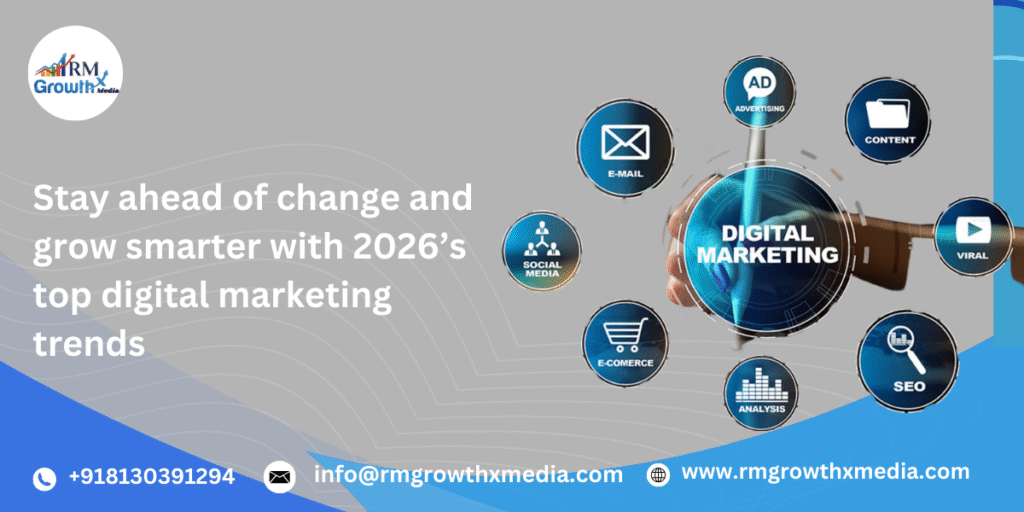
Navigating the fast-evolving digital marketing landscape requires businesses to constantly adapt their acquisition strategies to stay ahead of customer expectations and platform updates. Understanding the top digital marketing trends 2026 is essential for brands, marketers, and business owners who want to maintain high online visibility, capture intent-driven leads, and scale their revenue predictably. Many businesses ask a fundamental question: “Why are traditional marketing methods yields lower returns despite increasing ad budgets and consistent content publishing?” The answer lies in how search engine architectures, social discovery algorithms, and consumer trust dynamics have fundamentally shifted. In 2026, digital marketing is no longer about pushing generic promotional messages across isolated channels. It is about building intelligent, Answer Engine Optimized (AEO) ecosystems, leveraging direct-response short-form video discovery, capturing privacy-compliant first-party data, and deploying high-converting omnichannel lead funnels. In this comprehensive guide, we unpack the definitive digital marketing trends 2026 and provide an execution blueprint to help your business turn industry shifts into measurable growth. Why Legacy Marketing Strategies Are Failing in 2026 Before adopting new tools and tactics, it is critical to diagnose why past marketing practices are experiencing diminishing returns across modern channels: Over-Reliance on Keyword Density: Search engines no longer rank pages based on simple keyword repetition; algorithms prioritize contextual intent, direct answers, and verified domain authority. Third-Party Data Deprecation: Tracking users across external sites with third-party cookies is effectively obsolete, making broad interest targeting in paid ads less cost-effective. Platform-Level Zero-Click Behavior: Search engines and social media platforms are designed to keep users within their native ecosystems, reducing simple organic link click-through rates. Low-Value Content Saturation: Generic, surface-level AI-generated blog posts are routinely ignored by search crawlers and prospective customers alike. Friction-Heavy Conversion Funnels: Requiring site visitors to complete tedious multi-field contact forms before delivering value leads to high landing page bounce rates. Deep-Dive 2026 Digital Marketing Trends & Strategic Pillars 1. Answer Engine Optimization (AEO) & AI Overviews Search engine optimization has expanded far beyond traditional ten-blue-link SERP layouts. With Google AI Overviews and conversational answer engines dominating search results, users frequently receive instantaneous answers directly at the top of their screen. To remain visible in this zero-click search environment, content strategies must transition toward Answer Engine Optimization (AEO) and Generative Engine Optimization (GEO): Optimizing for Conversational Intent: Align content around complex long-tail questions (e.g., “how to optimize customer acquisition cost in 2026”) rather than short, generic head terms. Structuring Information for AI Parsing: Use clean bulleted lists, comparative data tables, and schema markup so search bots can process and cite your brand as a primary source. Demonstrating E-E-A-T (Experience, Expertise, Authoritativeness, Trustworthiness): Search engines prioritize original research, unique case studies, and real-world execution proof over generic summaries. Review official guidelines on Google Search Central E-E-A-T Guidance to ensure your editorial strategy aligns with search quality benchmarks. 2. Social Search Algorithms & Video-First Discovery Social media channels are no longer just passive feeds—they have evolved into primary search engines for younger demographics and B2B buyers evaluating solutions. Indexing Video Transcripts & Spoken Audio: Algorithms now parse spoken dialogue within videos, caption text, and visual overlays to serve micro-content in direct response to user search queries. Direct-Response Short-Form Video: High-performing brands focus on 30-to-60-second educational breakdowns, behind-the-scenes transformations, and client success breakdowns across Instagram Reels, YouTube Shorts, and LinkedIn. Social Search Optimization (SSO): Incorporate targeted search terms directly into video captions, naturally spoken scripts, and on-screen graphics to maximize discovery on social networks. To scale your organic reach and paid social performance, explore our specialized Social Media Advertising Services. 3. First-Party Data Capture & Automated Lead Magnets With third-party tracking restrictions making broad ad targeting less precise, building proprietary databases of first-party customer data has become a mandatory performance pillar. Interactive Lead Magnets: Replace generic PDF downloads with high-utility assets like automated pricing estimators, audit checklists, diagnostic quizzes, and specialized templates. Consent-Based Data Collection: Clearly communicate value propositions when requesting user contact information, ensuring complete compliance with global data privacy regulations. Automated Lead Nurturing Workflows: Instantly route captured opt-ins into multi-touch email sequences that deliver immediate value, address objection points, and guide prospects toward booking consultation calls. 4. Omnichannel Retargeting & High-Intent Paid Search Relying on a single acquisition channel introduces significant revenue risk. Top-performing businesses in 2026 leverage unified omnichannel funnels where organic authority and paid media reinforce one another. Intent-Based Paid Search: Target high-intent commercial search queries to present dedicated landing pages directly to decision-makers seeking immediate solutions. Cross-Platform Social Retargeting: Re-engage website visitors across Meta ad networks and Google Video/Display feeds with low-friction retargeting offers (e.g., free strategy sessions or video case studies). Refer to Meta Business Help Center for technical guidance on configuring server-side Conversion APIs (CAPI) to track custom event signals accurately. Data-Driven Conversion Bidding: Optimize paid ad bidding for verified opt-ins and pipeline revenue rather than top-of-funnel clicks or impressions. To eliminate wasted ad spend and scale your ROAS, partner with our team through our Paid Advertising Services. 5. Conversion Rate Optimization (CRO) & Web Architecture Driving web traffic without a conversion-focused site layout is an expensive mistake. In 2026, website design must function as a fast, responsive, direct-response sales environment. Page Speed & Core Web Vitals: Ensure site loading times remain well under 2 seconds across mobile devices to prevent visitor drop-off. Frictionless UX & Clean Hierarchy: Place strong, single-focused Calls to Action (CTAs) above the fold and simplify form fields to maximize submission rates. Social Proof & Trust Architecture: Position client reviews, verifiable metrics, video testimonials, and industry certifications strategically along user navigation paths. Strategic Internal Funnel Routing: Seamlessly guide readers from top-of-funnel informational blog posts into high-converting service landing pages. If your site structure is failing to convert traffic, explore our custom Web Design & Development Services. 2026 Digital Marketing Execution Matrix Strategic Area 2026 Core Priority Key Performance Metric Search Engine Optimization AI Overview citations & Answer Engine Optimization (AEO) Brand Search Citations & Organic Leads Paid Media Advertising Direct-response video creatives & Conversion bidding Cost Per Lead
2026 Digital Marketing Trends: What Every Marketer Needs to Know Read More »
Digital Marketing Trends