rmgrowthxmedia.com

RM GrowthX Media Team

The RM GrowthX Media team shares practical insights on SEO, digital marketing, performance marketing, social media, analytics, content strategy, and online business growth to help brands strengthen their digital presence and achieve measurable results.

social media marketing

Social Media Marketing for Beginners: Step-by-Step Success Guide

Introduction Welcome to your ultimate social media marketing step by step guide — especially curated for beginners who want to build a strong online presence, grow engagement, and drive business success. Whether you’re starting with zero followers or looking to sharpen your skills, this guide breaks down social media marketing basics into actionable steps anyone can follow.Social media marketing is the practice of using platforms like Facebook, Instagram, LinkedIn, and others to engage audiences, build brand awareness, and grow your business online. With the right approach, even newcomers can leverage social platforms effectively to connect with customers and achieve measurable results. 1. What Is Social Media Marketing? At its core, social media marketing basics involve using social platforms to promote content, connect with audiences, and achieve business goals such as increased visibility, engagement, leads, or sales. It’s not just about posting regularly — it’s about strategic planning, meaningful engagement, tracking results, and optimization.In today’s digital world, social media is one of the most cost-effective and influential marketing channels available. With billions of users active daily, it offers businesses a massive opportunity to grow. 2. Step 1: Define Your Goals The first step in your social media marketing step by step journey is to set clear goals. Ask yourself. What do you want to achieve with your social media efforts? Common objectives include: Increasing brand awareness Growing audience engagement Driving traffic to your website Generating leads Increasing sales Providing customer support You can use the SMART framework (Specific, Measurable, Achievable, Relevant, Time-bound) to keep your goals focused and trackable. 3. Step 2: Know Your Audience Understanding your audience is essential for successful social media marketing. Begin by identifying: Demographics (age, gender, location) Interests and hobbies Pain points and needs Social platform behavior (where they spend time online) Once you know your audience, you can tailor your content to serve them value — rather than just broadcasting generic posts. 4. Step 3: Choose the Right Platforms Not all platforms will be perfect for your business. As a beginner, it’s wise to start with a few where your audience is most active. For example: Instagram: Great for visual storytelling and lifestyle brands Facebook: Ideal for community building and advertisements LinkedIn: Best for B2B and professional networking Choose platforms strategically instead of trying to be everywhere. Focus builds quality 5. Step 4: Build Your Profile & Brand Voice Your profile is your digital storefront. Ensure it communicates your brand clearly: A clear and high-quality profile image (logo if business) A keyword-rich bio with a value proposition Website link or CTA Consistent brand tone and aesthetics A consistent tone and style help build brand trust and recognition. 6. Step 5: Create Your Social Media Marketing Strategy A strong social media marketing strategy for beginners provides the roadmap for all your activities. Key elements include: Content planning: Decide what content you’ll share and why Posting schedule: Consistency is vital — use a content calendar to plan posts Engagement plan: Respond to comments and messages quickly Analytics tracking: Use built-in tools to measure results and optimize An organized strategy prevents guesswork and ensures every post serves a purpose. 7. Step 6: Content Planning & Creation Content is the heart of social media. For beginners, focus on content that: 1. Educates 2. Engages 3. Inspires 4. Entertains Common content types include: Text posts with tips or insights Images and graphics Short videos & reels Polls and interactive content Behind-the-scenes stories A balanced mix keeps your feed fresh and engaging. Use a content calendar to plan posts weeks ahead for consistency. 8. Step 7: Engagement & Growth Engagement is more than likes — it’s about building relationships. Some effective social media marketing tips for beginners include: 💬 Respond promptly to comments and messages 💡 Ask questions to encourage conversations 📣 Feature user-generated content (UGC) 🤝 Collaborate with influencers or community members Active engagement helps nurture loyalty and improves your visibility within platform algorithms. 9. Step 8: Analytics & Improvement To ensure your strategy is working, tracking basic analytics is crucial: 1.Reach and impressions 2. Engagement (likes, comments, shares) 3.Website traffic from social platforms 4. Conversion metrics These data points reveal what content resonates best and where you should double down or adjust your strategy. Always refine based on performance insights. 10. Step 9: Tips for Small Businesses If you’re running social media marketing for small businesses, consider the following: 🔹 Focus on platforms where your customers spend time 🔹 Blend free organic posts with low-cost ads for visibility 🔹 Encourage reviews and testimonials 🔹 Use scheduling tools like Buffer or Hootsuite 🔹 Optimize visuals and captions for mobile audiences Small tweaks can create big impacts as your business presence grows online. Frequently Asked Questions 1. What is social media marketing step by step? Social media marketing step by step means planning your goals, choosing the right platforms, creating content, posting consistently, engaging with your audience, and tracking results to improve performance. 2. What are the basic concepts of social media marketing? The social media marketing basics include profile optimization, content creation, regular posting, audience engagement, and performance analysis. 3. Is social media marketing good for beginners? Yes, social media marketing is ideal for beginners because it is easy to start, budget-friendly, and helps build brand awareness and customer engagement quickly. 4. How can beginners start social media marketing? Beginners can start by understanding their audience, selecting one or two platforms, creating valuable content, and following a simple social media marketing strategy for beginners. 5. Is social media marketing useful for small businesses? Yes, social media marketing for small businesses helps increase visibility, connect with customers, and generate leads without a high marketing budget. Conclusion Social media marketing may feel overwhelming in the beginning, but with the right strategy and consistent effort, anyone can build a strong online presence and grow their brand. By setting clear goals, understanding your audience, choosing the right platforms, creating valuable content, and tracking performance, you can achieve long-term success step by step. At

Social Media Marketing for Beginners: Step-by-Step Success Guide Read More »

Digital Marketing Tips, , , , , , ,
SEO in Digital Marketing

What Is SEO in Digital Marketing

Learn what is SEO in digital marketing, how search engine optimization works, and the techniques, tools, and services that drive organic growth.

What Is SEO in Digital Marketing Read More »

Digital Marketing Tips, , , , , ,
Learn Digital Marketing Step by Step

How to Learn Digital Marketing Step by Step – A Complete Beginner’s Guide

Learn digital marketing step by step with RM GrowthX Media. Understand SEO, social media marketing, online marketing, and Google Ads PPC from basics to growth.

How to Learn Digital Marketing Step by Step – A Complete Beginner’s Guide Read More »

Digital Marketing Tips, , , , ,
Digital marketing trends 2026

2026 Digital Marketing Trends: What Every Marketer Needs to Know

Digital Marketing Trends 2026 are redefining how brands connect, engage, and build long-term relationships with audiences in an increasingly intelligent, automated, and trust-driven digital ecosystem. The digital world is evolving at an unprecedented pace, powered by rapid technological advancements, changing consumer expectations, and smarter algorithms across search engines, social platforms, and advertising networks. For marketers, keeping up with these changes is no longer just a competitive advantage—it has become a necessity. Businesses that fail to adapt risk losing visibility, engagement, and relevance in a highly saturated digital landscape. Understanding how digital marketing is transforming in 2026 allows brands to plan better strategies, make informed decisions, and create meaningful customer experiences that drive sustainable growth. As we move deeper into 2026, the future of digital marketing will be shaped by artificial intelligence, advanced personalization, ethical marketing practices, and seamless omnichannel experiences. From AI-powered automation and evolving search engine optimization trends to emerging social media latest trends, this blog explores the most important digital marketing shifts every marketer must understand, adopt, and prepare for in 2026. 1. AI-Driven Marketing Becomes the New Normal Artificial Intelligence has officially moved beyond experimentation and is now a core component of modern digital marketing strategies. By 2026, AI will be deeply embedded into nearly every marketing function—from audience research and data analysis to content creation, campaign optimization, and customer experience management. AI-powered tools are enabling marketers to work faster, smarter, and more efficiently, helping brands deliver personalized experiences at scale while reducing manual effort. What’s Changing? AI-generated content will become more refined, context-aware, and human-like, supporting blogs, ad copies, emails, and social media content Predictive analytics will help marketers anticipate customer behavior, identify trends early, and make data-driven decisions Chatbots and virtual assistants will provide real-time, personalized customer support, improving response times and user satisfaction AI will also play a major role in ad targeting, budget optimization, and performance forecasting, allowing marketers to maximize ROI with greater precision. Why It Matters AI empowers marketers to automate repetitive tasks, process massive volumes of data instantly, and deliver highly personalized marketing experiences. Brands that embrace AI early will gain higher operational efficiency, deeper customer insights, improved decision-making, and a strong competitive edge in crowded markets. Digital marketing tips for marketers: Use AI as a powerful support system, not a complete replacement. While automation improves efficiency, human creativity, storytelling, emotional intelligence, and strategic thinking will remain irreplaceable in the future of digital marketing. 2. The Future of Search: Beyond Keywords Search engines are evolving rapidly, and traditional keyword-focused SEO strategies are no longer sufficient. In 2026, search engine optimization trends will shift toward understanding user intent, delivering exceptional experiences, and building trust through high-quality, authoritative content. Search is becoming more conversational, visual, and context-driven, changing how users interact with search engines and how brands must optimize their content. Key Search Trends in 2026 Significant growth in voice search and conversational queries Increased adoption of visual and image-based search technologies Search engines prioritizing experience, relevance, credibility, and trustworthiness Google and other search platforms are placing stronger emphasis on content that demonstrates expertise, authority, and trust (E-E-A-T), rather than content created only to manipulate rankings. How Marketers Should Adapt Create content that directly answers real user questions and solves problems Focus on search intent instead of keyword stuffing or outdated SEO tactics Optimize content for voice search, mobile-first indexing, and user experience In 2026, search visibility will reward brands that prioritize clarity, authenticity, and user-focused content. Marketers who align SEO strategies with genuine value creation will achieve stronger rankings, higher engagement, and long-term organic growth. 3. Personalization Will Go Deeper Than Ever Generic marketing messages will no longer work in 2026. Consumers expect personalized experiences across every touchpoint—from emails and ads to websites and social media. What Personalization Looks Like in 2026 Dynamic content based on user behavior Personalized product recommendations Customized email and ad campaigns With better data analytics and AI tools, brands can deliver hyper-relevant content without being intrusive. The Balance to Maintain While personalization is powerful, respecting data privacy and transparency will be equally important. Trust will become a key differentiator in the future of digital marketing. 4. Social Media Becomes a Full-Funnel Platform Social media platforms are no longer just for awareness. By 2026, they will function as complete marketing ecosystems—from discovery to conversion. Social Media Latest Trends to Watch Rise of short-form and interactive content Social commerce integration Community-driven content over influencer hype More focus on authenticity and real stories Users are drawn to brands that feel relatable and human rather than overly polished. What Marketers Should Do Focus on engagement, not just followers   Build communities instead of pushing promotions   Experiment with interactive formats like polls, live videos, and stories   These social media latest trends highlight the shift from broadcasting messages to building meaningful conversations. 5. Video Content Continues to Dominate Video has been growing for years, but in 2026, it will be the most powerful content format across platforms. Why Video Works Higher engagement and retention Easy to consume and share Works well across search and social platforms Short-form videos, live streams, behind-the-scenes content, and educational videos will play a major role in brand storytelling. Tip for Marketers Focus on value and storytelling rather than perfection. Authentic, helpful videos perform better than overly produced ones.. 6. Data Privacy and Ethical Marketing Gain Importance With stricter data regulations and growing consumer awareness, ethical marketing will be a major trend in 2026. Key Changes Reduced reliance on third-party cookies Greater focus on first-party data Transparent data usage policies Consumers want to know how their data is used—and they reward brands that are honest and responsible. Digital Marketing Tips for Marketers Build trust through transparency Collect data with consent Focus on long-term relationships instead of short-term gains Ethical practices will shape the digital marketing trends 2026 more than many expect. 7. Content Marketing Shifts Toward Value and Authority Content overload is real. In 2026, content that educates, inspires, and solves problems will stand out.

2026 Digital Marketing Trends: What Every Marketer Needs to Know Read More »

Digital Marketing Trends, , , , ,
digital marketing for small businesses

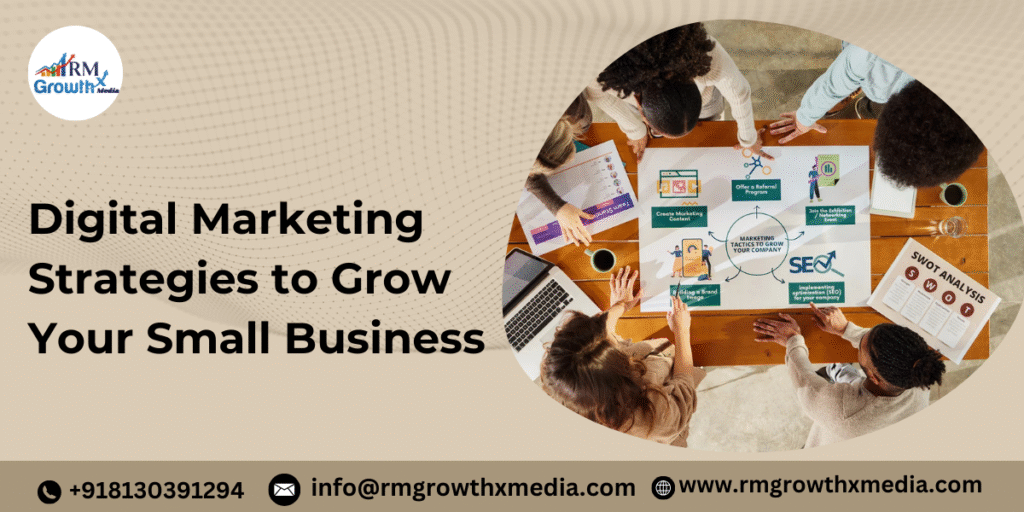
How Small Businesses Can Grow Online with Digital Marketing

Digital Marketing for Small Businesses is no longer just a strategy—it’s a necessity in today’s highly competitive online marketplace. Consumers are increasingly turning to the internet to search, compare, and purchase products and services. For startups, entrepreneurs, and small businesses, digital marketing offers a cost-effective and measurable way to compete with larger brands, target the right audience, and achieve sustainable growth. At RM GrowthX Media, we specialize in helping small businesses establish a strong online presence through result-driven digital marketing for small businesses, tailored to their unique goals and budgets. In this guide, we’ll explore actionable strategies, tools, and insights to help small businesses grow online, attract more customers, and build long-term credibility. Why Digital Marketing Is Important for Small Businesses Traditional marketing methods like print ads, flyers, and billboards are expensive, difficult to measure, and often ineffective for small businesses with limited budgets. In contrast, digital marketing for small businesses allows precise targeting, real-time performance tracking, and the flexibility to optimize campaigns for maximum results. Key benefits include: Cost-effective promotion: Reach your ideal audience without overspending and avoid wasting resources on uninterested customers. Wider online reach: Connect with local and global customers, expanding beyond geographic limitations. Measurable ROI: Use analytics and tracking tools to monitor every campaign and adjust strategies for better performance. Better customer engagement: Build meaningful relationships by delivering personalized content and messages tailored to customer needs. Strong brand awareness: Establish credibility and authority in your niche, helping your business stand out in a crowded market. These advantages make it clear why more small businesses are partnering with agencies like RM GrowthX Media to implement smart and scalable online marketing for small business growth. How Small Businesses Can Grow Online with Digital Marketing Successfully growing your small business online requires a structured, strategic, and consistent approach. Here’s a detailed roadmap of the most effective strategies: 1. Build a Strong Website Foundation Your website is the central hub of your online presence and a crucial part of digital marketing for small businesses. A professional, SEO-friendly website not only enhances credibility but also helps convert visitors into loyal customers. Best practices: Your website is the heart of your digital presence. A professional, SEO-friendly website helps convert visitors into customers. Best practices: Mobile-responsive design Fast loading speed Clear CTA (Call to Action) Keyword-optimized content Easy navigation A well-built website supports SEO for small businesses and increases credibility. 2. SEO for Small Businesses: Rank Higher on Google SEO for small businesses is one of the most effective ways to drive long-term organic traffic and attract potential customers. By optimizing your website and content for search engines, your business can appear prominently in search results for relevant queries. Key SEO activities: Comprehensive keyword research and optimization for high-converting search terms. On-page SEO, including meta titles, descriptions, headings, and alt text for images. High-quality blog content that educates, informs, and engages your audience. Local SEO strategies to target customers in your immediate area, which is essential for service-based and brick-and-mortar businesses. Building authoritative backlinks from relevant websites to strengthen domain authority. At RM GrowthX Media, we implement proven SEO strategies tailored to small businesses, helping them rank higher on search engines, improve visibility, and attract the right audience. 3. Content Marketing That Builds Trust Content marketing is a powerful tool in digital marketing for small businesses, helping brands educate, engage, and build trust with their audience. Quality content demonstrates expertise, positions your business as an authority, and improves SEO. Content ideas: How-to guides and tutorials that provide actionable insights. Case studies and success stories to showcase results and reliability. Customer testimonials and reviews to build social proof. Short videos, reels, and infographics that capture attention and encourage sharing. Consistency in content creation helps improve search rankings, enhances brand credibility, and drives organic traffic to your website. 4. Social Media Marketing for Visibility Social media marketing for small business is essential for direct audience engagement and brand building. Platforms like Facebook, Instagram, LinkedIn, and YouTube allow businesses to connect with their target audience through both organic and paid content. Marketing ideas for small business on social media: Post educational tips, tutorials, and industry insights. Share behind-the-scenes content to humanize your brand. Highlight customer reviews, testimonials, and case studies. Promote offers, deals, and seasonal campaigns. Use brand storytelling to engage emotionally with your audience. When combined with paid advertising, social media marketing ensures higher reach, better engagement, and accelerated growth for small businesses. 5. Paid Advertising for Quick Growth Paid advertising complements organic strategies and delivers immediate results. Small businesses can achieve faster visibility, lead generation, and conversions when paid campaigns are executed effectively. Popular paid channels: Google Ads to reach users actively searching for products or services. Facebook & Instagram Ads for social media reach and engagement. YouTube Ads for video marketing and storytelling. Retargeting campaigns to re-engage users who previously visited your website. Expert management by RM GrowthX Media ensures every ad investment is optimized to generate maximum ROI and drive sustainable growth. 6. Email Marketing for Customer Retention Email marketing for customer retention is a cost-effective strategy for nurturing leads, building relationships, and encouraging repeat purchases. Best practices: Personalize campaigns based on customer behavior and preferences. Deliver valuable content, offers, and updates consistently. Implement automated follow-ups to stay connected with leads. Segment your email list to send the right message to the right audience. Integrating email marketing into your digital marketing for small businesses strategy ensures long-term customer engagement and higher lifetime value. 7. Local SEO for Nearby Customers For service-based and location-specific businesses, Local SEO strategies are critical for reaching potential customers nearby. Optimizing for local search ensures your business appears in Google Maps, local queries, and geo-targeted searches. Local SEO strategies: Optimize and maintain a Google Business Profile with accurate information. Encourage and respond to positive customer reviews. Include local keywords in website content and metadata. Ensure consistent business listings across directories and platforms. Local SEO helps small businesses attract relevant traffic, generate leads, and boost in-store or local

How Small Businesses Can Grow Online with Digital Marketing Read More »

Digital Marketing Tips, , , , ,
Digital Marketing Step by Step

What Is Digital Marketing Step by Step

What is digital marketing and how does it work step by step? This beginner-friendly guide explains digital marketing in a simple way, covering search engine optimization (SEO), social media and marketing, online marketing strategies, Google Ads pay per click, and performance tracking to help businesses grow online.

What Is Digital Marketing Step by Step Read More »

Digital Marketing Tips, , , ,
Google’s upcoming update

Google’s Upcoming Update: What to Expect & How to Prepare

Google’s Next Algorithm Update is set to bring major shifts in search rankings, content quality evaluation, and user experience signals. Websites that rely on outdated SEO practices, thin content, or unedited AI text may face ranking drops. This guide breaks down the biggest expected changes—including E-E-A-T improvements, stricter AI detection, backlink quality signals, UX metrics, and user intent optimization. Use the actionable SEO checklist to strengthen your website before the update rolls out. With the right strategy and expert support from RM GrowthX Media, your brand can stay ahead, maintain rankings, and grow even during major Google updates.

Google’s Upcoming Update: What to Expect & How to Prepare Read More »

Digital Marketing Updates, , , , , , , , ,
Future of Digital Marketing

The Future of Digital Marketing: How AI & Automation Are Transforming Business Growth

The future of digital marketing is driven by the power of AI and automation. From smarter customer targeting to automated workflows and AI-powered marketing tools, businesses are shifting toward data-driven strategies that boost growth and efficiency. Discover how AI in digital marketing, marketing automation software, and advanced digital technologies are reshaping brand visibility, customer engagement, and online performance.

The Future of Digital Marketing: How AI & Automation Are Transforming Business Growth Read More »

Digital Marketing Updates, , , , , , , , ,
Digital Marketing Trends 2025

Top Digital Marketing Trends Shaping 2025

Discover the top digital marketing trends for 2025, from AI-powered marketing and short-form videos to voice search optimization and personalized customer experiences. Stay ahead in the digital landscape with insights from RM Growth X Media.

Top Digital Marketing Trends Shaping 2025 Read More »

Digital Marketing Trends, , , , , , ,