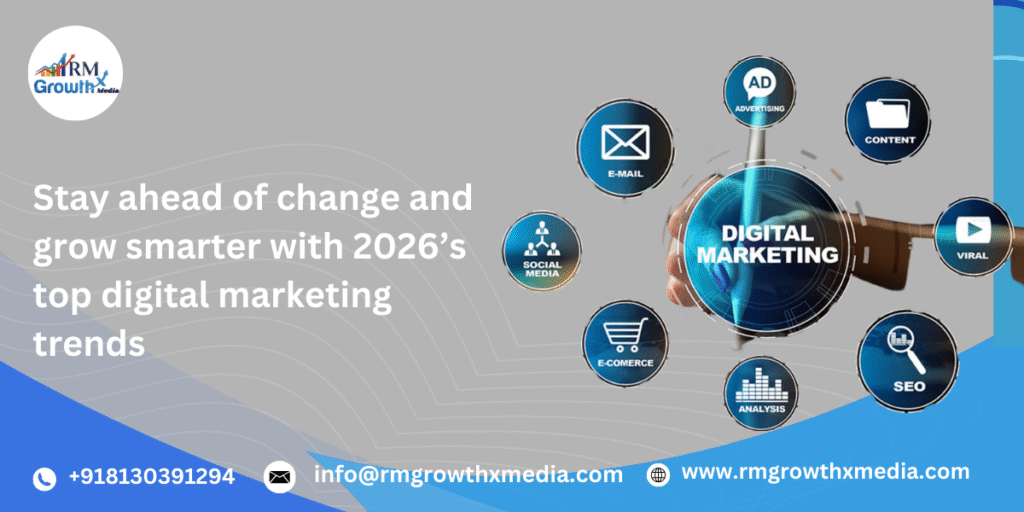
Digital Marketing Trends 2026 are redefining how brands connect, engage, and build long-term relationships with audiences in an increasingly intelligent, automated, and trust-driven digital ecosystem. The digital world is evolving at an unprecedented pace, powered by rapid technological advancements, changing consumer expectations, and smarter algorithms across search engines, social platforms, and advertising networks.
For marketers, keeping up with these changes is no longer just a competitive advantage—it has become a necessity. Businesses that fail to adapt risk losing visibility, engagement, and relevance in a highly saturated digital landscape. Understanding how digital marketing is transforming in 2026 allows brands to plan better strategies, make informed decisions, and create meaningful customer experiences that drive sustainable growth.
As we move deeper into 2026, the future of digital marketing will be shaped by artificial intelligence, advanced personalization, ethical marketing practices, and seamless omnichannel experiences. From AI-powered automation and evolving search engine optimization trends to emerging social media latest trends, this blog explores the most important digital marketing shifts every marketer must understand, adopt, and prepare for in 2026.
1. AI-Driven Marketing Becomes the New Normal
Artificial Intelligence has officially moved beyond experimentation and is now a core component of modern digital marketing strategies. By 2026, AI will be deeply embedded into nearly every marketing function—from audience research and data analysis to content creation, campaign optimization, and customer experience management.
AI-powered tools are enabling marketers to work faster, smarter, and more efficiently, helping brands deliver personalized experiences at scale while reducing manual effort.
What’s Changing?
AI-generated content will become more refined, context-aware, and human-like, supporting blogs, ad copies, emails, and social media content
Predictive analytics will help marketers anticipate customer behavior, identify trends early, and make data-driven decisions
Chatbots and virtual assistants will provide real-time, personalized customer support, improving response times and user satisfaction
AI will also play a major role in ad targeting, budget optimization, and performance forecasting, allowing marketers to maximize ROI with greater precision.
Why It Matters
AI empowers marketers to automate repetitive tasks, process massive volumes of data instantly, and deliver highly personalized marketing experiences. Brands that embrace AI early will gain higher operational efficiency, deeper customer insights, improved decision-making, and a strong competitive edge in crowded markets.
Digital marketing tips for marketers:
Use AI as a powerful support system, not a complete replacement. While automation improves efficiency, human creativity, storytelling, emotional intelligence, and strategic thinking will remain irreplaceable in the future of digital marketing.
2. The Future of Search: Beyond Keywords
Search engines are evolving rapidly, and traditional keyword-focused SEO strategies are no longer sufficient. In 2026, search engine optimization trends will shift toward understanding user intent, delivering exceptional experiences, and building trust through high-quality, authoritative content.
Search is becoming more conversational, visual, and context-driven, changing how users interact with search engines and how brands must optimize their content.
Key Search Trends in 2026
Significant growth in voice search and conversational queries
Increased adoption of visual and image-based search technologies
Search engines prioritizing experience, relevance, credibility, and trustworthiness
Google and other search platforms are placing stronger emphasis on content that demonstrates expertise, authority, and trust (E-E-A-T), rather than content created only to manipulate rankings.
How Marketers Should Adapt
Create content that directly answers real user questions and solves problems
Focus on search intent instead of keyword stuffing or outdated SEO tactics
Optimize content for voice search, mobile-first indexing, and user experience
In 2026, search visibility will reward brands that prioritize clarity, authenticity, and user-focused content. Marketers who align SEO strategies with genuine value creation will achieve stronger rankings, higher engagement, and long-term organic growth.
3. Personalization Will Go Deeper Than Ever
Generic marketing messages will no longer work in 2026. Consumers expect personalized experiences across every touchpoint—from emails and ads to websites and social media.
What Personalization Looks Like in 2026
- Dynamic content based on user behavior
- Personalized product recommendations
- Customized email and ad campaigns
With better data analytics and AI tools, brands can deliver hyper-relevant content without being intrusive.
The Balance to Maintain
While personalization is powerful, respecting data privacy and transparency will be equally important. Trust will become a key differentiator in the future of digital marketing.
4. Social Media Becomes a Full-Funnel Platform
Social media platforms are no longer just for awareness. By 2026, they will function as complete marketing ecosystems—from discovery to conversion.
Social Media Latest Trends to Watch
- Rise of short-form and interactive content
- Social commerce integration
- Community-driven content over influencer hype
- More focus on authenticity and real stories
Users are drawn to brands that feel relatable and human rather than overly polished.
What Marketers Should Do
- Focus on engagement, not just followers
- Build communities instead of pushing promotions
- Experiment with interactive formats like polls, live videos, and stories
These social media latest trends highlight the shift from broadcasting messages to building meaningful conversations.
5. Video Content Continues to Dominate
Video has been growing for years, but in 2026, it will be the most powerful content format across platforms.
Why Video Works
- Higher engagement and retention
- Easy to consume and share
- Works well across search and social platforms
Short-form videos, live streams, behind-the-scenes content, and educational videos will play a major role in brand storytelling.
Tip for Marketers
Focus on value and storytelling rather than perfection. Authentic, helpful videos perform better than overly produced ones..
6. Data Privacy and Ethical Marketing Gain Importance
With stricter data regulations and growing consumer awareness, ethical marketing will be a major trend in 2026.
Key Changes
- Reduced reliance on third-party cookies
- Greater focus on first-party data
- Transparent data usage policies
Consumers want to know how their data is used—and they reward brands that are honest and responsible.
Digital Marketing Tips for Marketers
- Build trust through transparency
- Collect data with consent
- Focus on long-term relationships instead of short-term gains
Ethical practices will shape the digital marketing trends 2026 more than many expect.
7. Content Marketing Shifts Toward Value and Authority
Content overload is real. In 2026, content that educates, inspires, and solves problems will stand out.
What Will Work
- In-depth blogs and guides
- Thought leadership content
- Educational videos and resources
Search engines and users both value content that demonstrates expertise and credibility.Brands like RM Growthx Media, which focus on practical insights and user-centric strategies, highlight how valuable content can build trust without sounding promotional.
8. Automation Improves Efficiency, Not Creativity
Marketing automation will become more advanced, handling tasks like:
- Email workflows
- Ad optimization
- Lead nurturing
However, automation will support marketers—not replace them. Strategy, creativity, and decision-making will still rely on human input.
Smart Approach
Use automation to save time, but invest that time in understanding your audience and improving your messaging.
9. Omnichannel Marketing Becomes Essential
Consumers interact with brands across multiple platforms—search, social media, email, websites, and apps. In 2026, seamless omnichannel experiences will be expected.
What This Means
- Consistent messaging across platforms
- Integrated customer journeys
- Unified data tracking
A disconnected experience can lead to lost trust and conversions.
10. Skills Marketers Need in 2026
To keep up with digital marketing trends 2026, marketers must continuously upgrade their skills.
Essential Skills
- Data analysis and interpretation
- Understanding AI and automation tools
- Content strategy and storytelling
- SEO and search behavior knowledge
- Social media trend awareness
Learning and adapting will be the biggest advantage in the future of digital marketing.
Final Thoughts
The digital landscape in 2026 will be smarter, faster, and more customer-centric. Marketers who stay updated with digital marketing trends, embrace technology responsibly, and focus on real value will thrive.
From AI and personalization to evolving search behavior and social media latest trends, the future belongs to brands that listen, adapt, and connect authentically.
Whether you’re an individual marketer, a growing business, or a digital agency, understanding these trends will help you stay relevant and competitive in the years ahead.
FAQs: Digital Marketing Trends 2026
They refer to emerging strategies like AI-driven marketing, personalization, ethical practices, and omnichannel experiences shaping digital growth in 2026.
They help brands stay competitive, improve customer engagement, and adapt to evolving technologies and consumer behavior.
AI automates campaigns, analyzes data, personalizes content, and improves decision-making across marketing channels.
Personalization delivers tailored content, emails, and ads based on user behavior, increasing engagement and conversions.
SEO is shifting toward user intent, content quality, experience, and trust rather than only keyword optimization.
Short-form videos, social commerce, interactive content, and community-driven engagement are leading social media trends.
Ethical practices build trust by ensuring transparent data usage, privacy compliance, and long-term customer relationships.
Yes, video remains one of the most engaging formats for storytelling, education, and brand awareness.
Omnichannel marketing creates seamless customer experiences across platforms, improving trust and conversions.
Marketers should focus on AI tools, data analysis, content strategy, SEO knowledge, and social media trend awareness.